The God Is Good
A Designer’s First Glance: Clean, Calm, and Confident
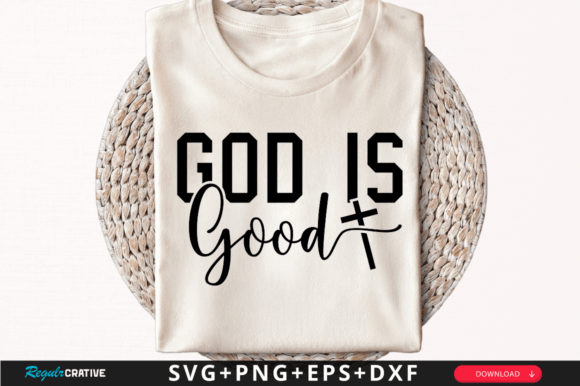
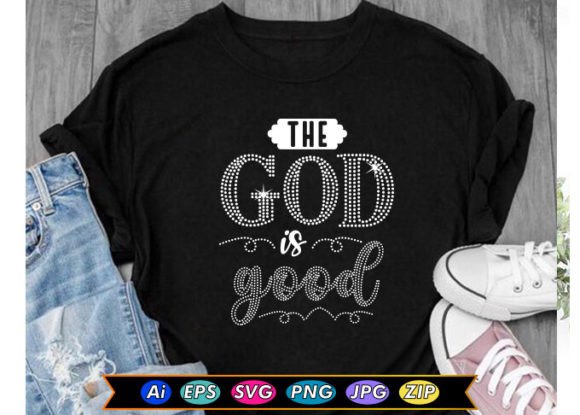
When I opened The God Is Good for the first time, what struck me wasn’t flash or ornament—it was quiet intention. The layout is centered, balanced, and unhurried. The letterforms are rounded but not overly soft, with subtle weight variation that suggests hand-drawn warmth without sacrificing legibility. There’s no extra flourishes, no distracting icons or halos—just clean, grounded typography. That makes it unusually versatile: it reads as reverent but approachable, traditional but not dated. As a designer who regularly selects embroidery files for client projects, I immediately pictured it on a natural linen tea towel for a boutique kitchen line—or stitched in ivory thread on a charcoal sweatshirt for a small faith-based apparel shop.
Real-World Stitching: Where It Shines (and Where to Pause)
Last week, I prepped The God Is Good for a custom embroidered tote bag—cotton canvas, medium-weight, with a slightly nubby texture. I used a medium tear-away stabilizer and tested stitch density first on scrap. The design held up beautifully: satin-stitched edges stayed crisp, fill areas remained even, and the spacing between letters allowed breathability in the stitching—no puckering or thread buildup. That’s a strong sign this machine embroidery design was built with real fabric behavior in mind.
It also worked well on a lightweight baby onesie—stitched in soft pastel thread—but only after switching to a light cut-away stabilizer and reducing top tension slightly. On stretchy fabrics like jersey tees or ribbed knit caps, I’d recommend testing the The God Is Good embroidery file with a basting stitch first to check for distortion. The letter height is generous enough to avoid tiny, fragile details, but tight corners (especially in the “G” and “d”) do demand careful hooping and consistent fabric feed.
Fabric & Finish Considerations You Can’t Skip
The God Is Good performs best on stable, medium-to-heavy fabrics: cotton twill, fleece-lined sweatshirts, canvas totes, denim aprons, and woven pillow covers. On thin or sheer fabrics—think voile baby blankets or lightweight rayon tea towels—I’d suggest adding a backing layer or opting for a simplified version (if the editable AI or SVG file allows easy simplification). Dark fabrics? No issue—the transparent PNG print lets you preview contrast easily, and the bold letterforms pop cleanly in light thread. Just remember: if you’re using it for commercial embroidery or Etsy seller listings, always test black-and-white mockups to ensure readability at thumbnail size.
Curved surfaces—like structured caps or curved pillow seams—require repositioning the design so the baseline stays level. The lack of intricate shadowing or gradient fills in The God Is Good actually helps here: it eliminates stitch stacking issues common in complex graphics. And because it’s delivered in editable vector formats (AI, SVG, EPS), adjusting kerning or scaling for a narrow cap front or petite baby bib is straightforward—not guesswork.
What This Design Says About Your Brand—Before a Single Stitch
When customers see The God Is Good on a finished product—a handmade apron, a personalized holiday gift, or a boutique sweatshirt—they don’t just read words. They register tone: sincerity over spectacle, clarity over clutter. That builds trust. For craft business owners, that matters. A clean, well-executed The God Is Good embroidered patch signals professionalism. A slightly off-center or overly dense stitch-out on a nursery pillow cover? That undercuts perceived value—even if the sentiment is heartfelt.
I’ve seen this design elevate Etsy listings simply by pairing it with thoughtful photography: stitched on unbleached muslin, styled beside a ceramic mug and open journal. Its simplicity gives the handmade product room to breathe—and makes the buyer feel like they’re choosing meaning, not mass production.
Practical Notes from My Embroidery Hoop
- Always test first: Run The God Is Good on scrap fabric matching your final project’s weight and weave—even if it’s “just text.” Thread tension shifts more than you think.
- Stabilizer isn’t optional: Medium tear-away works for most cottons; light cut-away is safer for knits or baby items. Skip the “no-stabilizer” experiment—this isn’t a running-stitch sketch.
- Check your hoop size: The design’s width and height aren’t listed, so measure the JPG or open the AI file before hooping. Better to scale down than cram.
- Thread color matters deeply: Ivory on navy reads serene; bright gold on black feels festive; charcoal on oatmeal reads modern. Avoid low-contrast combos unless intentional (e.g., tonal embroidery for luxury appeal).
- Licensing clarity is non-negotiable: Since The God Is Good is sold as a digital embroidery file for T-Shirt Designs and Graphics, confirm whether commercial use—including selling finished embroidered products or digital mockups—is permitted. When in doubt, contact the seller before listing on Etsy or launching a small shop product.
- Use the editable files wisely: The AI and SVG files let you adjust spacing, resize proportionally, or convert outlines for applique design work—but don’t over-edit. Preserve the original rhythm of the lettering.
Final Thought: A Quiet Anchor in a Busy Market
In a landscape crowded with ornate fonts, glitter effects, and over-designed graphics, The God Is Good stands out by doing less—intentionally. It doesn’t shout. It settles. That makes it ideal for meaningful, long-lasting pieces: baptism gifts, anniversary pillows, church fair merchandise, or everyday apparel that carries weight without weighing down. As an embroidery designer and reviewer, I don’t reach for it when I need “wow.” I reach for it when I need *truth*, executed cleanly. And in handmade product creation—whether for personal joy or commercial craft business—that kind of reliability is rare, and worth every stitch.